
(αβγ)₂/Erythrocytic Rebirth.
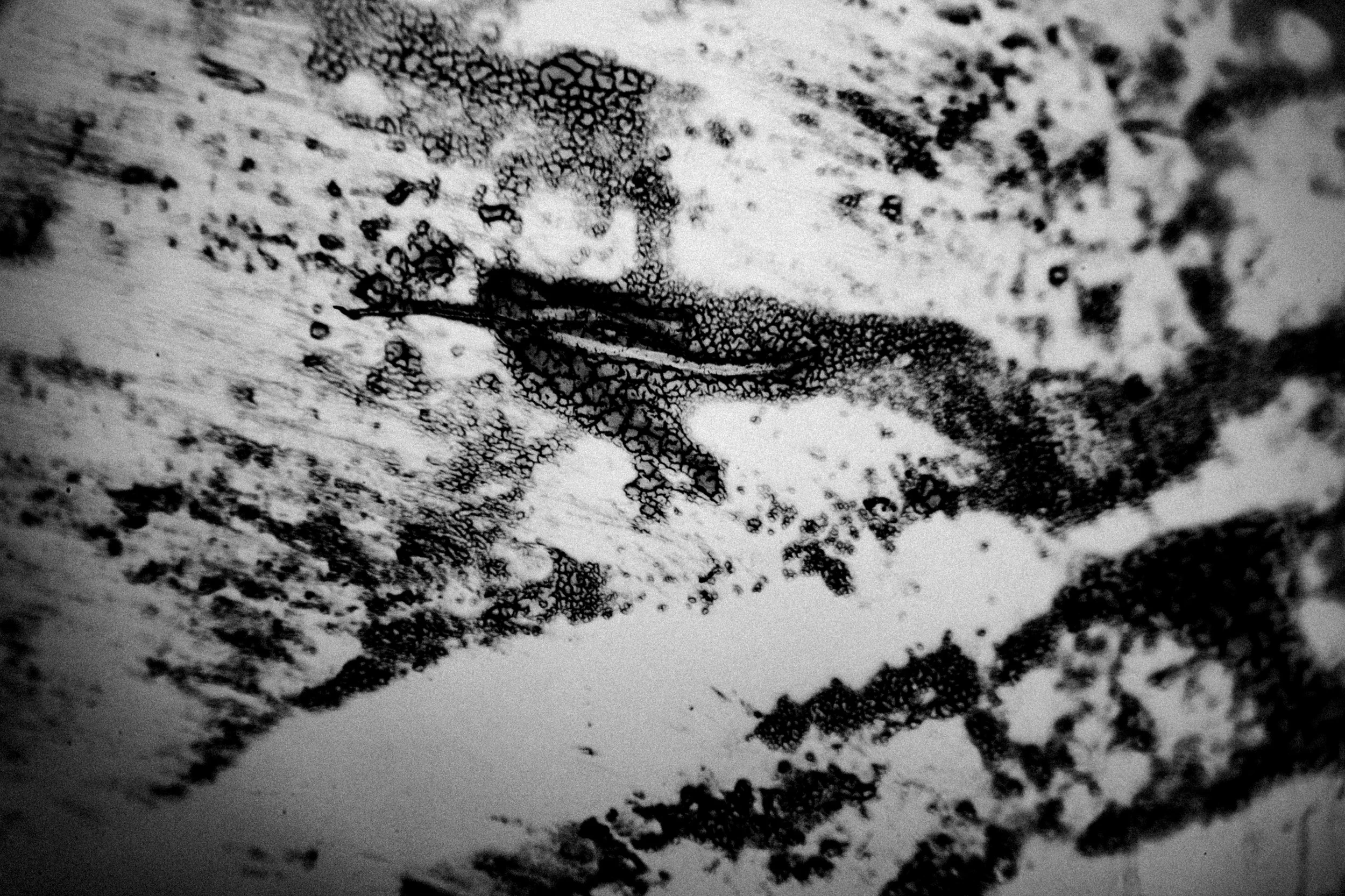
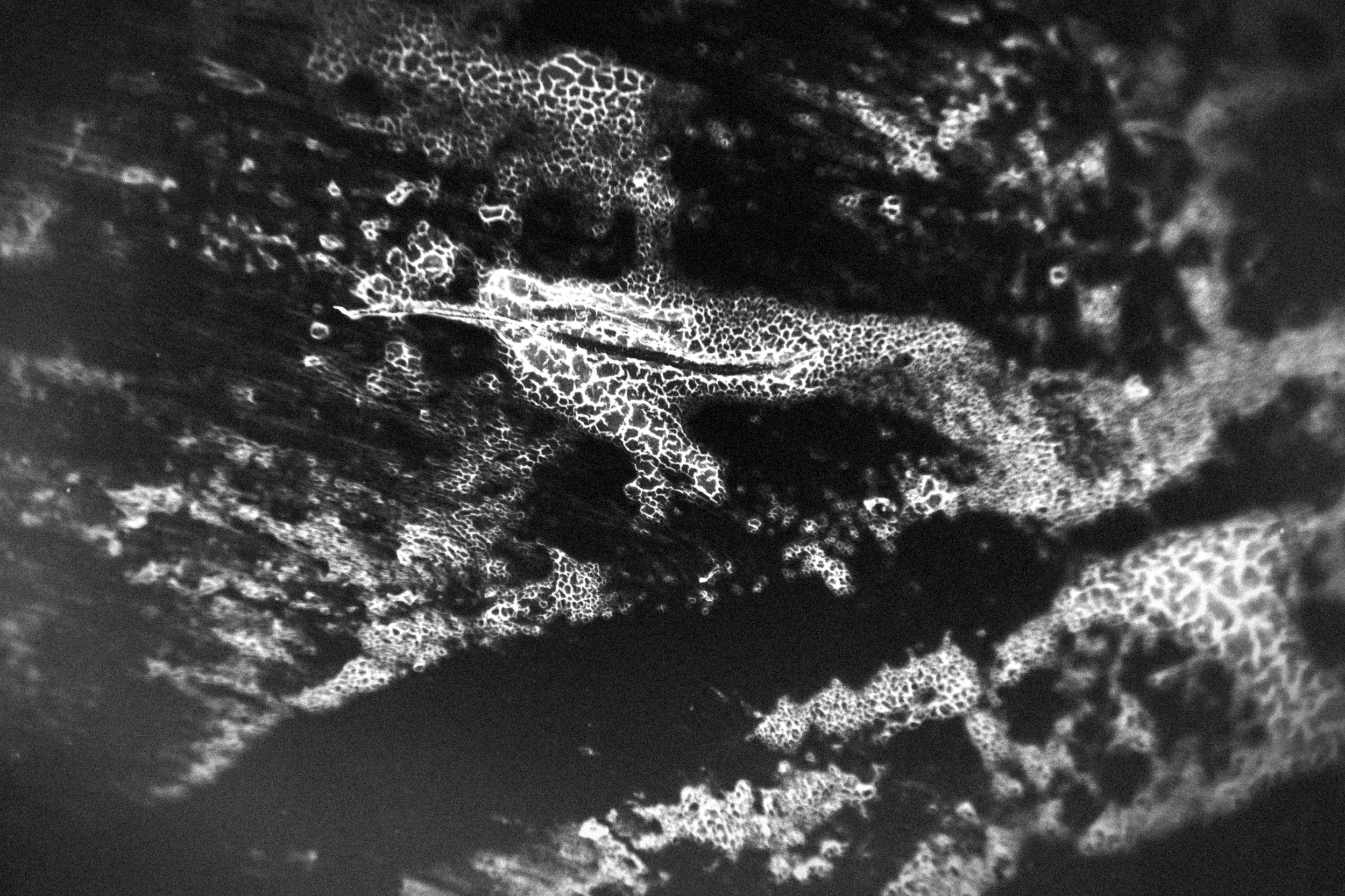
As blood cools, it retains a trace of the life it once sustained. Having left the mortal body, now stripped of warmth and pulse, it settles into a dense crust. A crack opens in its depths, an erythrocytic fissure from which an angelic figure emerges. Only its outline is visible, merging in places with the edges of the fissure. Its contours follow the fractures in the cooled blood, as though the crust itself had shifted its form.
The work draws on the early Christian motif of baptism by blood, which links martyrdom with purification. Here, the spilled blood becomes a kind of womb. Within its cold, motionless depths, an angel takes shape as the image of a soul that has found rest and a new pulse. Its emergence evokes both birth and the transformation of the very matter in which it takes place. The cold trace of death becomes a medium capable of bearing life.
The angel bears the imprints of the matter from which it was born. Traces of what came before can still be seen in the curves of its figure. The pain that shaped those curves remains in the hardened blood, smouldering in the angel as a faint echo. As the figure emerges from the fissure, its contours separate from the crust. In that separation, birth becomes liberation.
The faith that once filled the martyr lives on in the angel. Taking on a new form, it sheds the weight it bore in his lifetime. The blood holds the memory of what he endured, and its child inherits the contours of that memory and the freedom to live on.
-
Blood